Table Of Content
- This Company Can Print You A New Home—Here’s What You Need To Know
- Are your prefab kit homes available in Central Florida?
- The most Exciting 3D Printed Houses & 3D Printed Buildings
- Standardized Sustainable Homes, Enhancing Canada's Housing Landscape
- Heat Recovery Ventilators & Energy Recovery Ventilators
- ICON & New Story 3D Printed House in Austin, Texas USA
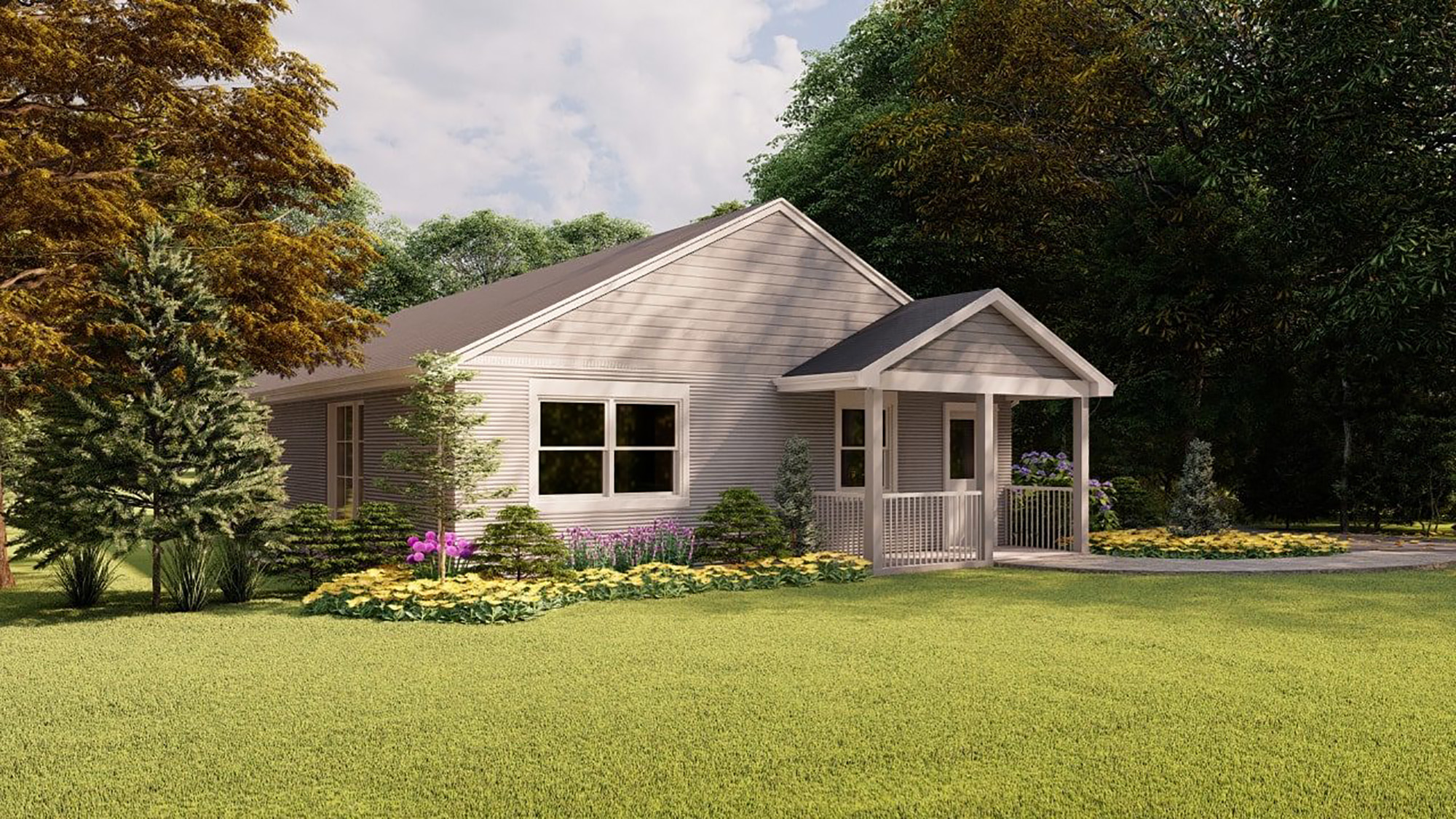
COBOD, or Construction of Building on Demand, developed the BOD2 3D printer, which operates on three axes, making it possible to print in a circular design on-site, and more importantly, print multiple floors. We have also published the complete history of 3D printing, which you can view here. Sent every Thursday and featuring a selection of the best reader comments and most talked-about stories. So far, the cement-based homes have withstood a 7.4 magnitude earthquake and the severe winter storms that took place at the start of 2021.
This Company Can Print You A New Home—Here’s What You Need To Know
Inside, the cabin has just enough space for a small sleeping area, with a bed that can be put away when not in use. A 3D-printed bath constructed using the same printing technique is located outside. The company is also working towards more complex architectural capabilities like geometric designs, patterned walls and domes. Next year, it plans to construct a collection of round hotel rooms in Marfa, Texas, as well as some neoteric designer homes. The project's design puts automated construction to the test with complicated features, like built-in shelving.
Are your prefab kit homes available in Central Florida?
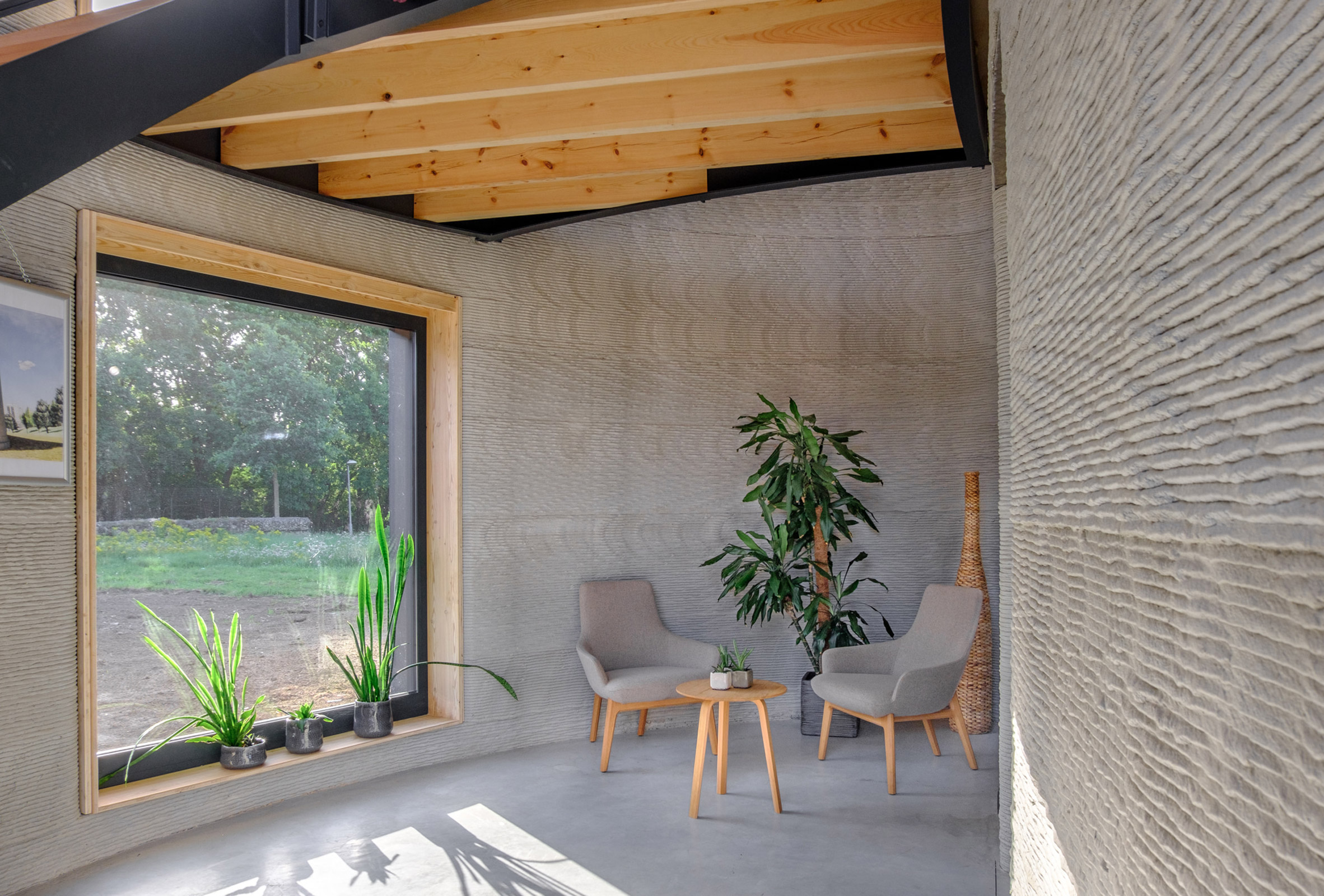
The Vulcan is a giant, specially designed 3D printer that discharges the Lavacrete mixture according to a pre-determined floor plan. Each layer is called a bead, and it takes about 30 minutes for a full layer to be printed. After that time, the mixture has hardened enough for the Vulcan to start the next layer. For one Austin, Texas-based company, the answer is one of the newest trends in home improvement—3D-printed homes. Proponents of the technology say 3D printing could address a range of construction challenges, including labor shortages and building more resilient homes in the face of natural disasters. In Houston, a giant printer is building what designers say is the first 3D-printed two-story house in the U.S.
The most Exciting 3D Printed Houses & 3D Printed Buildings
After starting construction in July, the printing process is almost halfway done, he says. "In the future, it has to be fast, simple design in order to compete with other building technologies," said Hikmat Zerbe, Cive's head of structural engineering. Lok, who co-founded the design firm Hannah, says her team aims to eventually scale up their designs to be able to efficiently 3D print multifamily homes.
Standardized Sustainable Homes, Enhancing Canada's Housing Landscape
Detroit's first 3D-printed house is on the market - Outlier Media
Detroit's first 3D-printed house is on the market.
Posted: Wed, 13 Dec 2023 08:00:00 GMT [source]
A viral hit, this was definitely the moment the world woke up to the possibility of 3D printed concrete houses in the future. This viral video not only proved it could be done, but that 3D printed dwellings could be built faster than people could build them, and the cost of a 3D printed house was far lower. Probably the most famous and viral 3D printed house build, this interestingly shaped house was built back in 2017 in just one day – while it snowed! According to the team the house cost just over $10,000 to build, including the furnishings with windows and doors, though we will discuss why these figures may not tell the full story further on in this article.
But once the 3D-printing technology is improved, he says, builders may reach a point where such construction is cheaper than non-printed housing. SQ4D builds full-size concrete houses and commercial structures faster, safer, and stronger, while dramatically reducing costs, using 3D printing technology. ICON teamed with architectural firm Lake|Flato to build a three-bedroom, two-and-a-half bath residence just outside of downtown Austin, Texas. Its curved walls and rounded corners are insulated with Lavacrete and reinforced with steel. In the months since, ICON has broken ground on a 100-home project, projected to be the largest 3D-printed residential community in the United States.
ICON & New Story 3D Printed House in Austin, Texas USA
In this case, "extruding" refers specifically to the method of pushing the printing material (usually a thermoplastic filament) through a heated nozzle, where it melts and is deposited onto a build platform to create the desired 3D shape. The companies developing construction 3D printers for houses are still refining the technology, and do not have enough of these machines to build thousands of houses yet. The most accurate project in terms of a 3D printed house’s cost is the French build in number 2 on our ranking. This project cost around $170,000 and was roughly 20% than traditional methods would have cost. ARCS, or Autonomous Robotic Construction System, is a low-power consumption technology that robotically builds the house on-site. Along with printing the exterior and interior walls, it also prints utility conduits, siding, and sheathing, effectively taking an entire crew’s worth of labor down to three people.
The best lumber choices for wood frame construction of homes
ARCS’ 3D-printed-concrete compressive strength tests exceed the industry standard by double. It’s a rare occasion when something debunks the “too good to be true” principle, such as 3D printing an entire house in less than 24 hours. Using a larsen truss system, for example, is a quick and effective way to build a very efficient structore from biosourced materials.
What are the environmental benefits of a house built with a 3D printer?
Building materials have seen a massive increase in price lately, that hasn’t helped matters either for determining cost. While 3D printed houses are durable and resistant to climatic conditions, they have not yet been shown to perform better than conventional houses made of wood and bio-based materials. 3D-printed homes are created using large concrete 3D printers, and they are typically more affordable than traditionally constructed homes — plus, they’re also built in a sustainable fashion.
The next level up from that are companies that offer prefab ‘turn key’ homes to choose from, and the best of those will let you make modifications to meet your specific needs. We like a lot of those options, but our favorite are prefab kit houses for sure, especially those that meet LEED or Passive house performance levels. As for the one that you mentioned, nothing stands out as being particularly fantastic about it, in fact the diagram on the main page seems a little redundant, what’s with the OSB sheathing as well as ZIP structural sheathing? Cheaper than two layers of sheathing would be swapping one out for an exterior peel and stick WRB membrane.
However, these homes tend to be pretty basic and may not offer all of the amenities you would want in a full-time residence. The most impressive aspect of this project however is the construction process itself. ICON has been keeping busy since our last update and has now formally listed their first 3D printed home for sale on the streets of Austin, Texas.
Developers claim that the building holds a compressive strength three times greater than conventional brick, which is largely credited to a special printer supplied by COBOD, a 3D-printing construction company. Unlike other projects at the time — and even now — this house features two stories and was constructed in one piece. It’s just under 27 feet tall, about the size of a residential telephone pole, and spans 967 square feet. Its sustainable design uses low-energy floor and ceiling heating, sourced from solar panels and a heat pump. The University of Maine Advanced Structures and Composites Center is 3D-printing housing structures exclusively from bio-resins and wood fibers to combat labor shortages and widen access to affordable housing.
Since the Texas project they have also printed a series of 3D printed houses in Mexico. Another recent viral story, this collaboration between ICON and New Story made headlines when they 3D printed a house in Texas, USA earlier this year. The prototype 3D printed house built cost the companies approximately $10,000, though they assert that this number can be brought down to $4,000 going forwards. This administrative building comprises two floors, featuring beautiful 3D printed architecture born out of an ongoing collaboration between Russian 3D printed house company Apis Cor and the Dubai Municipality. Generally, they are more eco-friendly, affordable and efficient compared to traditional housing construction. However, it’s important to know the limitations of this new method of construction.
This question of 3D printed house cost is a common one, and just as with traditional housebuilding, it depends. Though projects such as Apis Cor’s 24-hour build cost just around $10,000, this is a far smaller and more basic house than most in the West are accustomed to. Here are seven examples of 3D-printed homes that have already been built, including a bio-plastic micro home and a house printed from a mixture of soil, straw and rice husks.
Anyone in the market for a new home is likely aware that we are in the midst of a housing affordability crisis. According to the Real House Price Index (RHPI), housing affordability is the worst it has been in over three decades. Paired with higher mortgage rates of 7% and higher, this crisis is causing havoc among prospective homebuyers. In September 2023, the Fannie Mae Housing Survey reported that 84% of consumers believe that it’s a bad time to buy a home.
Some already are — such as Project Milestone (listed below), which had its first tenants move in on April 30, 2021, or this three-bedroom, Virginian house, which became move-in ready in just 12 hours. It’s important to note that additive construction work sites are not entirely autonomous. Aside from the setup and breakdown of the equipment, human oversight is necessary to ensure there are no technical hiccups. Specialists must be on-site to cut holes for second-fix installments, such as plumbing, electrical wiring, doors and windows. According to the Graham Construction Material and Commodity Review, published in May 2021, the cost of concrete is expected to rise with sand shortages and the residential and commercial construction boom.



No comments:
Post a Comment